
01 · Consistently created from source documents
Built from the documents, not retyped from them.
A distribution spreadsheet is only as good as the terms typed into it. Studio reads the cap table export and the charter, lines the two up, and shows where each term came from before anything is saved.
1 of 3
Documents are read on your device
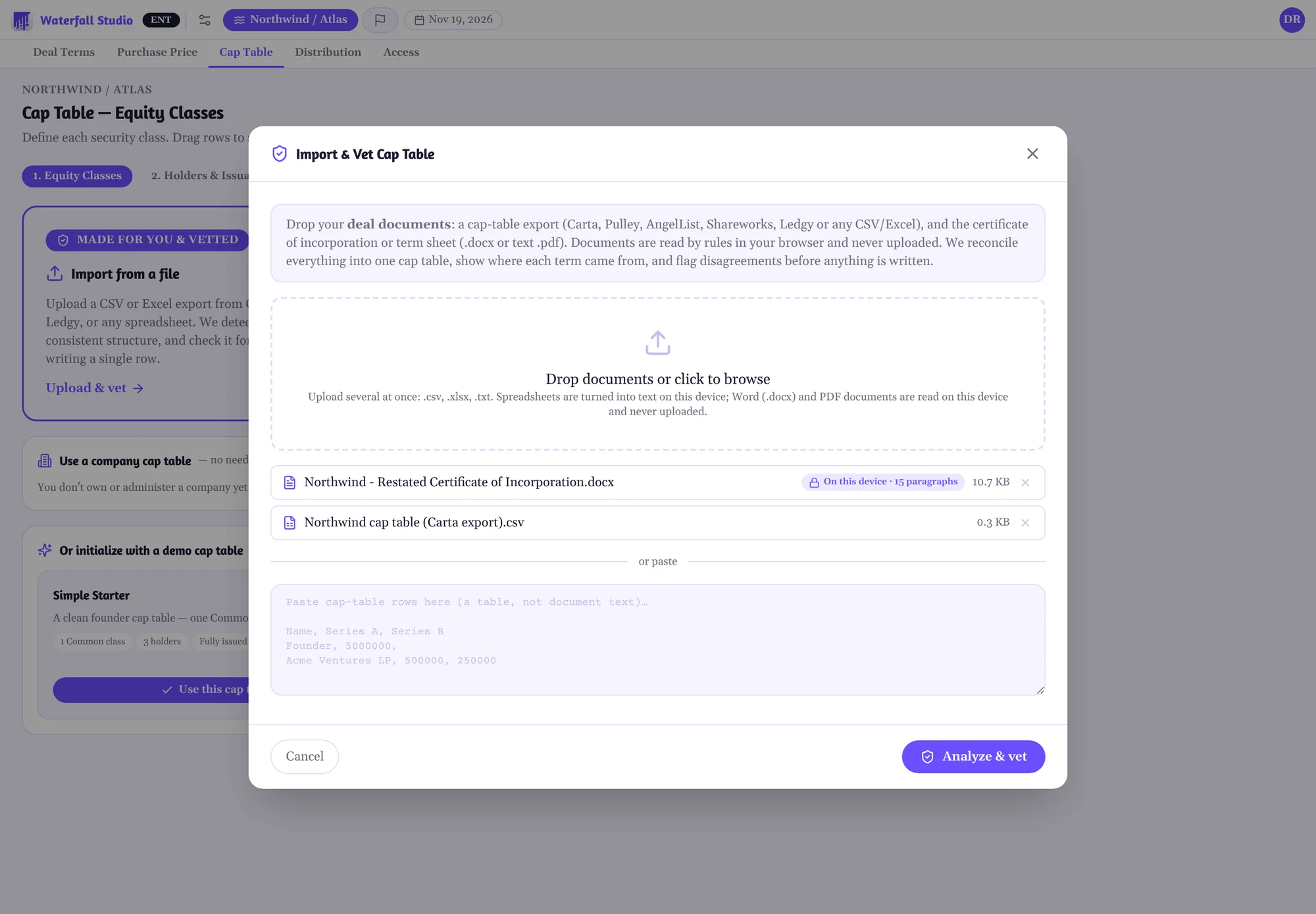
Drop the cap table export alongside the certificate of incorporation or term sheet. Word and PDF documents are read by rules in your browser and are never uploaded.
- Cap table exports from Carta, Pulley, AngelList, Shareworks, Ledgy, or any CSV or Excel file
- Charters and term sheets in .docx or text .pdf, read on the device
- Rule-based reading. No language model touches the document
2 of 3
Every term cites its clause
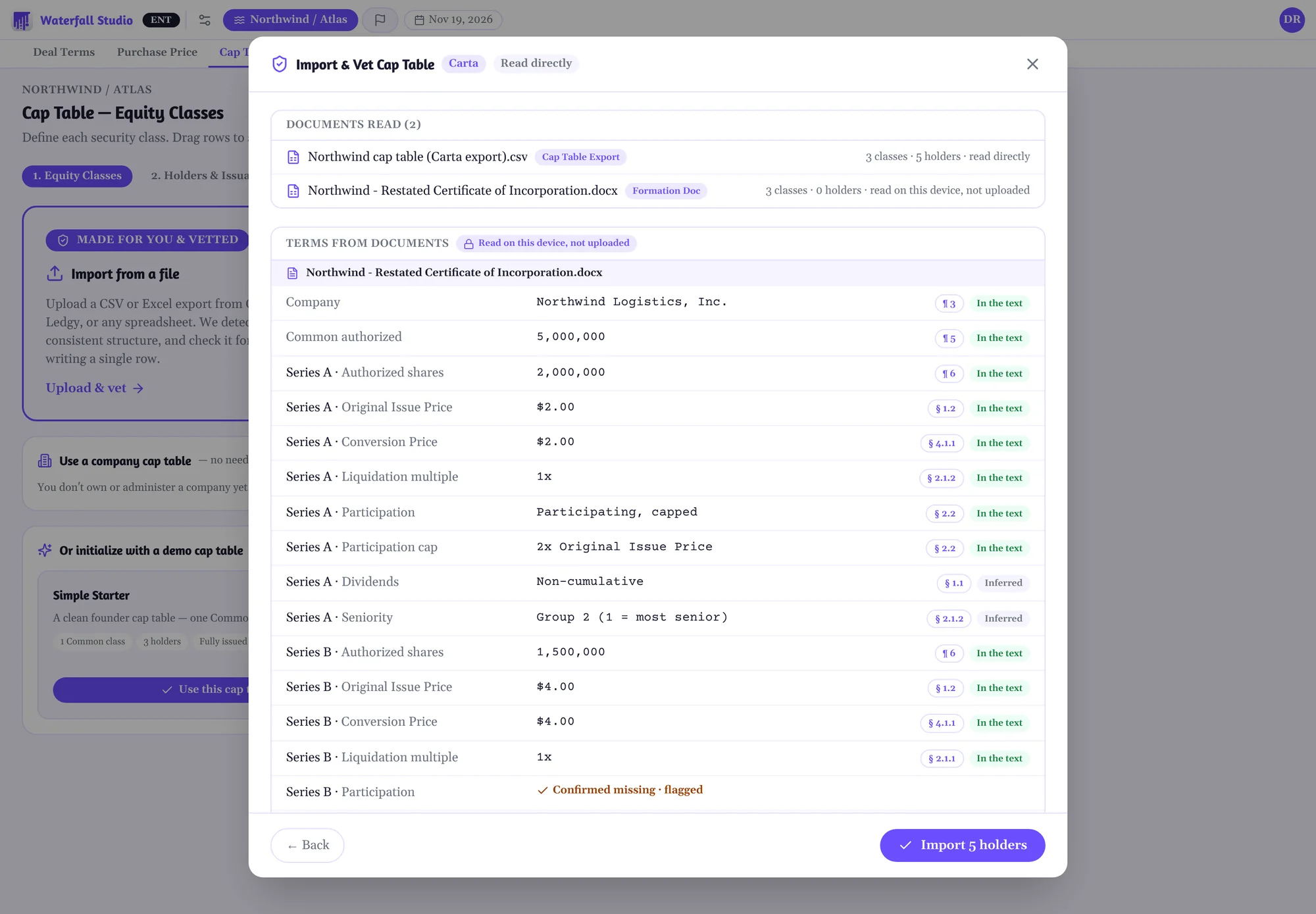
Each term Studio finds is listed with the section it came from and whether it was stated in the text or inferred. A term the document does not state is flagged for you to confirm. It is never guessed.
- Section and paragraph reference on every row
- "In the text" and "Inferred" are labeled separately
- Here the charter is silent on Series B participation, so it is confirmed missing and raised as a deal flag
3 of 3
The source stays attached to the term
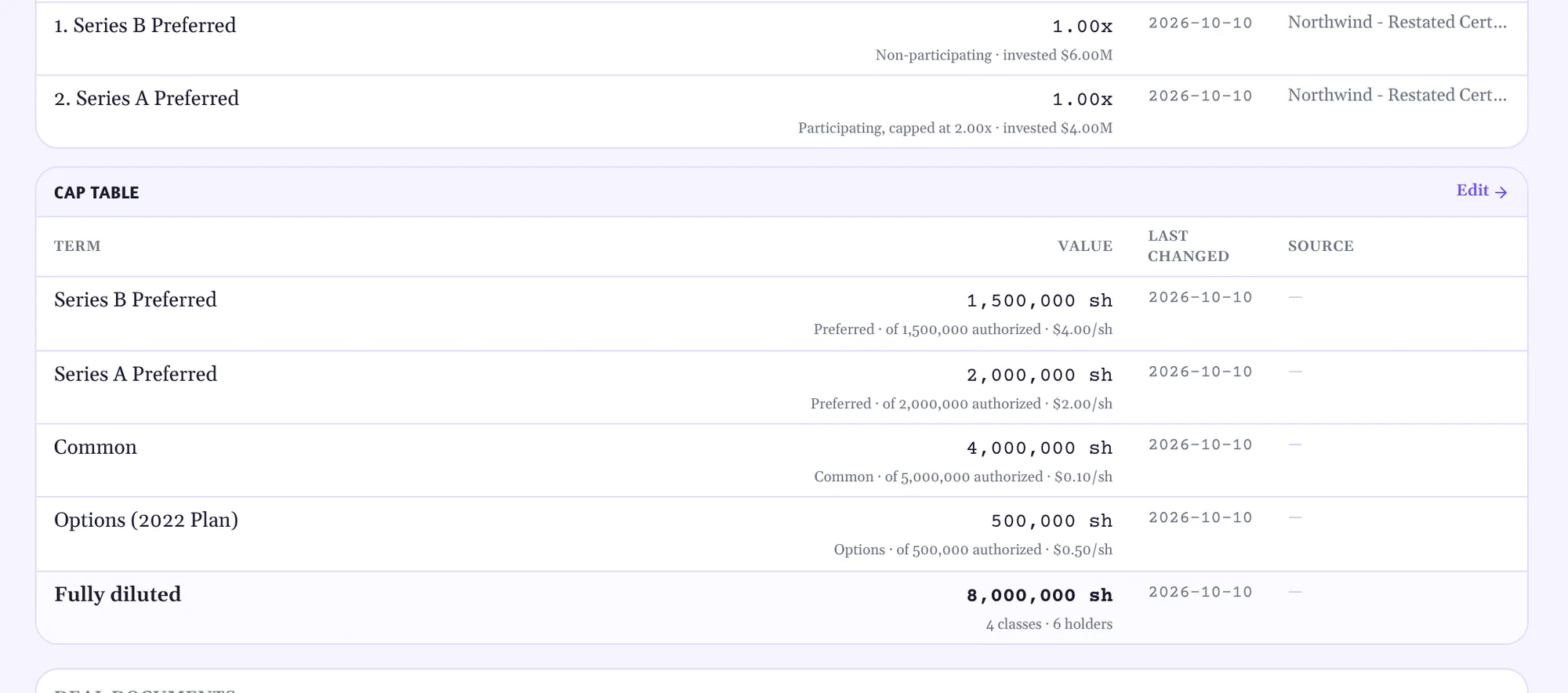
After import, Deal Terms lists the preference stack and cap table in one place. Each row keeps its value, the date it last changed, and the document it came from.
- Value, last changed and source on one row
- Preference rank, multiple, participation and cap read straight from the charter
- Cap table totals reconcile to authorized shares
About these screens
Every image on this page is a capture of Merger Waterfall Studio running one example deal: Northwind Logistics acquired by Atlas Freight Group for $15.00M. The company, the people and the documents are fictional. The screens are not mock-ups.
Next
Stakeholder-ready waterfalls
One picture for the board, and a private link for each holder.
Try it on your next deal.
Bring the cap table export and the charter. Leave with a distribution spreadsheet you can hand to the board, the buyer and the auditor.